
Reserve Bank of India on Friday said it has imposed a penalty of Rs 93 lakh on Axis Bank for various violations, including those related to KYC guidelines. The central bank has also slapped a fine of Rs 90 lakh on IDBI Bank. A monetary penalty of Rs 93 lakh has been imposed on Axis Bank for non-compliance of certain directions issued by RBI, the regulator said in a release.

The RBI on Friday asked Paytm Payments Bank to stop opening new accounts amid "material supervisory concerns" observed in the bank. "Reserve Bank of India has today, in exercise of its powers, inter alia, under section 35A of the Banking Regulation Act, 1949, directed Paytm Payments Bank Ltd to stop, with immediate effect, onboarding of new customers," the central bank said in a statement. The bank has also been directed to appoint an IT audit firm to conduct a comprehensive system audit of its IT system.

North Block is concerned that when India is trying to attract more investment, putting up restrictions on audit firms could create an avoidable bad advertisement.

From CEOs to RBI governors, cricket's rich imagery and strategy resonate deeply with leadership, uncertainty, and decision-making across industries and global diplomacy, points out Suveen Sinha.

Alternative investment funds (AIFs) have crossed Rs 5 trillion in terms of funds raised, while the investment commitments have surpassed Rs 12 trillion for the first time as of September, according to data released by the Securities and Exchange Board of India (Sebi).

While the capital spending is being maintained at 3.1 per cent of the GDP, a little more would have boosted economic growth even further, suggests Rajiv Memani.
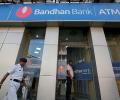
Bandhan Bank said on Monday that it has been empanelled by the Reserve Bank of India (RBI) to act as an agency bank to facilitate transactions related to government businesses. The RBI's decision will help Bandhan Bank in contributing to nation-building, its MD and CEO Chandra Sekhar Ghosh said. The announcement comes months after a RBI guideline that authorised scheduled private sector banks as agency banks of the regulator for the conduct of government business.

The Supreme Court on Wednesday allowed banks and financial institutions to provide services related to cryptocurrencies by setting aside the RBI's 2018 circular which had prohibited them. A three-judge bench, headed by Justice R F Nariman, said the Reserve Bank of India circular is liable to be set aside on the ground of "proportionality". "Accordingly, the writ petitions are allowed and the circular dated April 6, 2018 is set aside," said the bench, also comprising justices Aniruddha Bose and V Ramasubramanian.

One97 Communications (OCL), the company that operates brand Paytm, received a nod from the National Payments Corporation of India (NPCI) to onboard new Unified Payments Interface (UPI) users. This comes nearly nine months after the Reserve Bank of India (RBI) placed an embargo on OCL to add new customers.
The Reserve Bank on Monday cautioned people against frauds in the name of KYC updation and advised them not to share key information like account details or passwords with unidentified persons or agencies. In a release, the RBI said it has been receiving complaints/reports about customers falling prey to frauds being perpetrated in the name of KYC updation. "The usual modus operandi in such cases include receipt of unsolicited communication, such as, calls, SMSs, emails, etc., by customer urging him/her to share certain personal details, account / login details/ card information, PIN, OTP, etc. or install some unauthorised/ unverified application for KYC updation using a link provided in the communication," it said.

If the policy is extended to NBFCs and co-operative banks, they will have to disclose divergence in asset classification and provisioning during RBI inspections in their audited financial reports. Till now, these entities have been exempted from this. At present, there are more than 98,000 co-operative banks and 10,000 NBFCs. Sources said the RBI would concentrate on the top 50 co-operative banks and NBFCs.

Reserve Bank Governor Shaktikanta Das on Friday said the rupee is holding up relatively well when compared to the currencies of emerging market peers and advanced economies. Days after the domestic currency breached the 80-level against the dollar, Das said Reserve Bank of India (RBI) has zero tolerance for volatile and bumpy movement in the rupee and added that the central bank actions have helped in smoother movement. He said RBI has been supplying US dollars to the market to ensure adequate supply of liquidity and also clarified that the central bank does not target a particular level for the currency.

The Reserve Bank on Wednesday allowed inbound travellers from G20 nations arriving at select airports to use the popular UPI for making payments in the country. Later, the RBI also proposes to extend the Unified Payments Interface (UPI) facility to travellers from all countries. UPI is a system that powers multiple bank accounts into a single mobile application, merging several banking features, seamless fund routing & merchant payments into one hood.

Former RBI governor D Subbarao has suggested that the government should come up with a 10-year road map for privatisation of all Public Sector Banks (PSBs) as it would provide much needed predictability to stakeholders. Subbarao further said that the big bang approach to privatisation of state-owned banks is not desirable but at the same time the issue should not be put on the back burner. "Ideally, we should have a road map, maybe over a 10 year timeframe, to privatise all PSBs. "That will give much needed predictability to all stakeholders," he told PTI.

RBI Governor Shaktikanta Das on Thursday said the central bank does not "emulate" others when it comes to regulations and asserted that the bank's as well as his own opposition to cryptocurrencies remain unchanged, a day after US regulators allowed bitcoin Exchange Traded Funds (ETFs). He also said that emerging markets and the world cannot afford to have a "crypto mania". "What is good for another market need not be good for us.

A top-class board is important from a systemic point of view, more so at a time when the wider financial world and India Inc is chasing the same talent as banks.

The Reserve Bank of India on Monday said that RBL Bank is well capitalised and its financial position remains "satisfactory", amid speculations relating to the private sector lender in certain quarters in wake of recent events surrounding the bank. In a statement, the Reserve Bank of India (RBI) also said there is no need for depositors and other stakeholders to react to speculative reports. The bank's financial health remains stable, it said.

Days after the US Fed raised the interest rate, the RBI may go in for its third consecutive policy rate hike by at least 35 basis points to check high retail inflation, experts said. The central bank has already announced to gradually withdraw its accommodative monetary policy stance. The Reserve Bank of India's rate-setting panel -- the Monetary Policy Committee -- will meet for three days from August 3 to deliberate on the prevailing economic situation and announce its bi-monthly review on Friday.

Major credit issuers, including the largest - HDFC Bank - have integrated their systems with the Bharat Bill Payment Systems (BBPS) for receiving credit card repayments via third-party applications.

All that you must know about the pros and cons of gift deeds, tax implications, essentials, documents required, conditions, etc...

Banks reported muted treasury gains during April-June of FY25 (Q1FY25) following Reserve Bank of India's (RBI's) revised norms on investment portfolio effective from April 1, 2024, despite softening of government bond yields. "Banks have reported muted treasury gains during Q1 of FY25 despite softening of yields across the curve. "The main reason was change in the investment valuation and classification guidelines by the RBI.

Parliament on Tuesday passed amendments to the Banking Regulation Act to bring cooperative banks under the supervision of the RBI, a move aimed at protecting the interest of depositors.

The Lok Sabha elections in 2024 are not a consideration when it comes to monetary policymaking, said Reserve Bank of India governor Shaktikanta Das to underscore the central bank's commitment to controlling inflation. "It's not possible for me to comment what we do in the next MPC (Monetary Policy Committee), but one thing I can tell and I would like to make it very clear-that the fact of elections coming up in 2024 is not a factor at all so far as monetary policymaking is concerned. "Monetary policymaking is for checking (and) controlling inflation," Das said at the Business Standard, BFSI Insight Summit.

Linking businesses with account aggregator (AA) network -- a financial data sharing platform -- will help small entrepreneurs get easy access to credit and create millions of jobs, Infosys Technologies co-founder and chairman Nandan Nilekani said on Tuesday. He made the remarks during a session at the 'GSV + Emeritus India Summit' event in Gurugram. In the Budget for FY24, the government said that the GST system could join the account aggregator network, which means that every company in the GST system can ask for its data back which includes their tax filings and invoices, Nilekani said.

India will be the world's third-largest economy by 2028 as it becomes the world's most sought-after consumer market and gains share in global output, driven by macro stability influenced policy and better infrastructure, Morgan Stanley said. From a $3.5 trillion economy in 2023, the Indian economy is projected to expand to $4.7 trillion in 2026, which will make it the fourth largest in the world behind the US, China and Germany.

Following the Reserve Bank of India's (RBI's) action against Paytm Payments Bank, participants in the fintech ecosystem have turned their attention to giving priority to compliance with regulatory norms. Fintech industry players say the episode will ensure adherence to such measures. Executives Business Standard spoke to said companies should have clarity on their requirements.

In its letter, finance ministry has pointed to sections 35, 35A and 36 of the Banking Regulation Act, 1949, to highlight the powers and functions of the RBI as regulator

The Reserve Bank has found gaps in banks' corporate governance despite issuing guidelines on the matter, Governor Shaktikanta Das said on Monday. Addressing directors of bank boards, Das said such gaps, which have been mitigated, could have caused "some degree of volatility". He also hit out strongly against "smart accounting" to conceal stress and bloat financial performance.
Reserve Bank of India (RBI) deputy governor M Rajeshwar Rao on Wednesday defended the central bank's decision of not allowing industrial houses to float banks, and said more deliberations are needed before RBI changes its stance on this issue agreed back in 2001. An internal working group (IWG) of the RBI had recommended allowing industrial groups into banking, but late last month the RBI said it kept on hold the two recommendations of allowing industrial houses and large non-banks to float banks. However, RBI had accepted 21 of the 33 recommendations of the group that submitted its report a year ago.

Companies are legally allowed to invest in markets in India, but the practice has seldom stirred central bank concern until recently, when they have become much more active players.
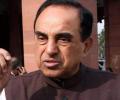
The BJP member also sought to put the LVB-DBS merger on hold in order to facilitate a forensic audit of the takeover of the assets of both banks.

The government on Wednesday said that all urban cooperative banks and multi-state cooperative banks will come under the supervision of the Reserve Bank of India, a development aimed at providing comfort to depositors and prevent repeat of PMC Bank like scams. The President of India will promulgate an ordinance to this effect, Information and Broadcasting Minister Prakash Javadekar told reporters after the meeting of the Union Cabinet.

Officials said Sebi first proposed to the FinMin to amend the relevant provisions in the Sebi Act to discontinue RBI's representation on its board, as it already has adequate presence of government nominees and in its over 25 years of existence the regulator has evolved as an "effective and one of the best in the world".

HDFC Bank on Tuesday said the Reserve Bank of India (RBI) has appointed an external IT firm for carrying out a special audit of its IT infrastructure in the aftermath of repeated service outages at the country's largest private sector lender over the past two years. "RBI has appointed an external professional IT firm for carrying out a special audit of the entire IT infrastructure of the bank under Section 30 (1-B) of the Banking Regulation Act, 1949..., at the cost of the Bank under Section 30 (1-C) of the Act.
The government has proposed "drastic changes" in the rules framed to retune the composition of three committees of the RBI: Board for Financial Supervision, the Board for Payment and Settlement Systems and the Committee of the Central Board.
The Reserve Bank of India (RBI) has relaxed card-on-file data storage norms pertaining to guest transactions checkout, whereby now, apart from the card issuer and the card network, the merchant or its payment aggregator involved in the settlement of the transactions can save the data for a maximum of T+4 days or till the settlement date, whichever is earlier. And, acquiring banks have been permitted to store the card-on-file data until January 2023 for handing other post-transactions activities. The industry reached out to the RBI on the issue and sought a solution.

'Despite rising inflows, many NRIs lack awareness about NRO and NRE accounts and mistakenly use family accounts or invest in a relative's name.' 'Many are unaware of tax implications.'
The net credit card additions in the banking sector nearly halved to 2 million in the first quarter of the current financial year (Q1FY25) from the previous quarter due to seasonal and regulatory factors. According to the Reserve Bank of India (RBI) data, the net credit card additions during the April-June quarter of FY25 stood at 2 million, 48 per cent lower than 3.9 million in the December-March quarter of FY24.

The government is planning to introduce legislative changes to the Foreign Exchange Management Act (Fema) regulations, with a focus on easing the pathway for inflows from a foreign portfolio investor to transition seamlessly into foreign direct investments (FDI) once the FPI surpasses the 10 per cent ownership threshold in a company. This move stems from multiple requests by foreign investors seeking to streamline the reporting requirements that arise when their stakes in Indian firms cross the 10 per cent mark.

